February 13, 2026
Zero-Emission Autonomous Vessels for Smarter Marine Operations
Zero-Emission Autonomous Vessels for Smarter Marine Operations
Start-Ups Technology Area: Artificial Intelligence (AI), CleanTech, Robotics
Clearbot’s modular, unmanned surface vessels deliver sustainable, low-cost marine services – from pollution recovery and port security to surveys, inspections and real-time water monitoring – across ports, harbours and inland waterways, all remotely operated with live data transmission.
The Journey So Far
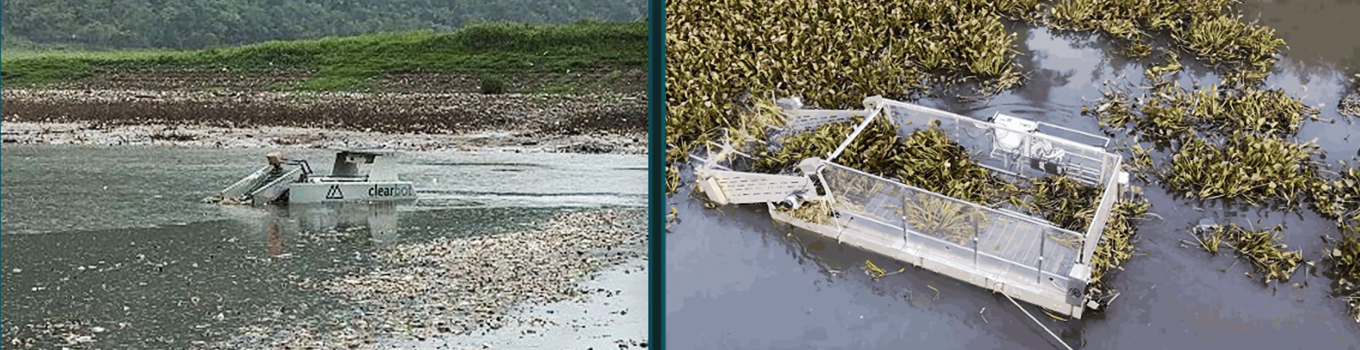
Clear Robotics builds unmanned, electric boats and ships that do dull, dirty and dangerous marine work. Their zero emissions, autonomous, unmanned surface vessel can deliver several marine services on inland waterways, ports and harbours, providing customers (governments and municipalities) with autonomous, sustainable and low-cost operations for marine services such as pollution recovery, port security, draft surveys, inspections, bathymetric survey, and water quality monitoring.
Clearbot is designed to be modular – the same vessel can be used for marine refuse collection, carrying cameras, sensors and equipment for, monitoring, inspections, surveys, or even carrying a payload of 1.5 tons. The vessels can be controlled remotely and all data can be transmitted over the internet in real time, allowing our customers to keep manpower requirements and fuel costs low, and swiftly deploy remote-controlled vessels to do these day-to-day tasks.
Innovation Opportunity
Existing regulations in the Singapore port mandate vessels 300GT and above to engage the service of authorised pilots for navigation within the port. This process involves pilots transferring to vessels via pilot launches, completing their tasks onboard, and then transferring to other vessels as needed. However, the current operational model limits each pilot to handling one vessel at a time, with 40% of their shift spent travelling between jobs.
Solution
This operational model poses safety risks for pilots during boarding and disembarking stages, as they approach vessels—whether stationary or moving—via pilot launches and use the vessels’ means, including boarding ladders, to come onboard. To address safety and efficiency concerns, the concept of “remote pilotage” is being explored. Remote pilotage involves licensed pilots conducting piloting duties from off-board positions.
Clear Robotics presently has a fleet of more than ten boats for garbage removal, ship draft survey and sea-bed mapping with government agencies and ports across Asia.
Their solar chargeable vessels can be operated from anywhere in the world at the press of a button and cut marine emissions (and fuel cost) by 90% and increase manpower productivity by 300%.

Looking Forward
Currently has 25 autonomous boats in the fleet with plans to launch 100 vessels by late 2027with regional expansion to the Middle East and Africa.